
The detail that changes the room.
Well-chosen handles bring proportion, finish and balance to an existing kitchen. Small in scale, but repeated everywhere.
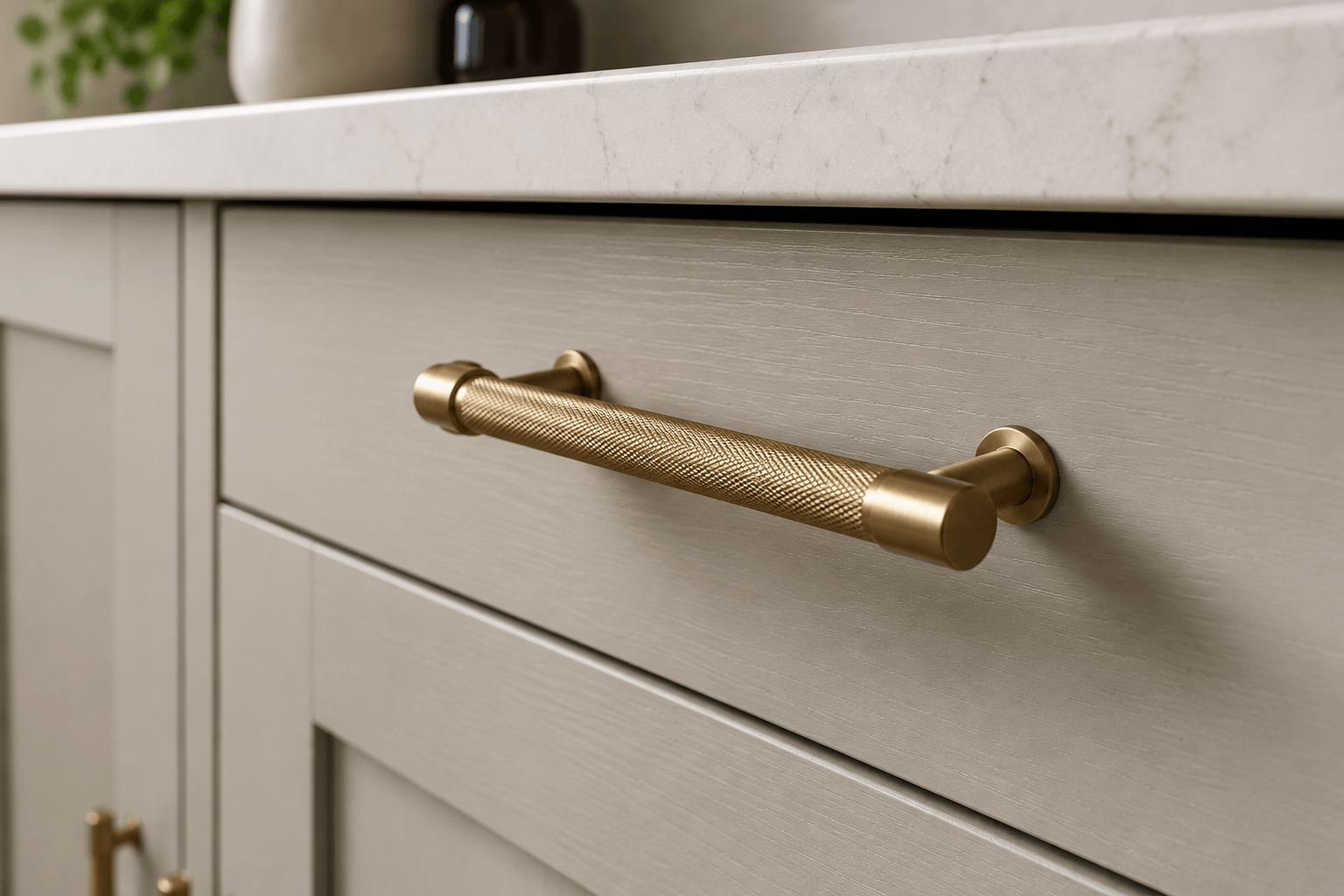
Handles should feel part of the kitchen, not added to it. The best choices quietly connect the cabinetry, worktop, appliances and wider scheme.
Proportion before fashion.
Trends come and go. Scale, placement and finish determine whether a handle actually works in the room.
Length
A handle needs enough presence for the door or drawer it sits on without overpowering the cabinetry.
Projection
Depth affects both comfort and visual weight. Too bulky and the hardware dominates; too slight and it disappears.
Placement
Consistent positioning creates calm. Good placement should feel natural to use and visually balanced from across the room.
Finish
The metal tone should relate to the worktop, appliances, taps and surrounding materials rather than compete with them.
Warm, dark, cool or quiet.
The finish changes the personality of the same handle. We look at the room as a whole before deciding where the hardware should sit tonally.
Hardware should sit comfortably with other finishes without making the scheme feel over-coordinated.
Because handles appear across the whole kitchen, restraint usually creates the more premium result.
Worktops, taps, appliances and lighting all influence whether a finish feels right.
Good hardware must feel comfortable and substantial every time it is touched.
Details are where an update becomes a scheme.
When handles are chosen as part of a wider Room & Revive project, we consider them alongside replacement doors and worktops rather than treating them as an isolated accessory.
That means the hardware supports the room rather than becoming the loudest thing in it.
Planning an update to your existing kitchen?
Book a consultation and we’ll look at what is worth retaining, what should change and how doors, worktops and handles can work together.